
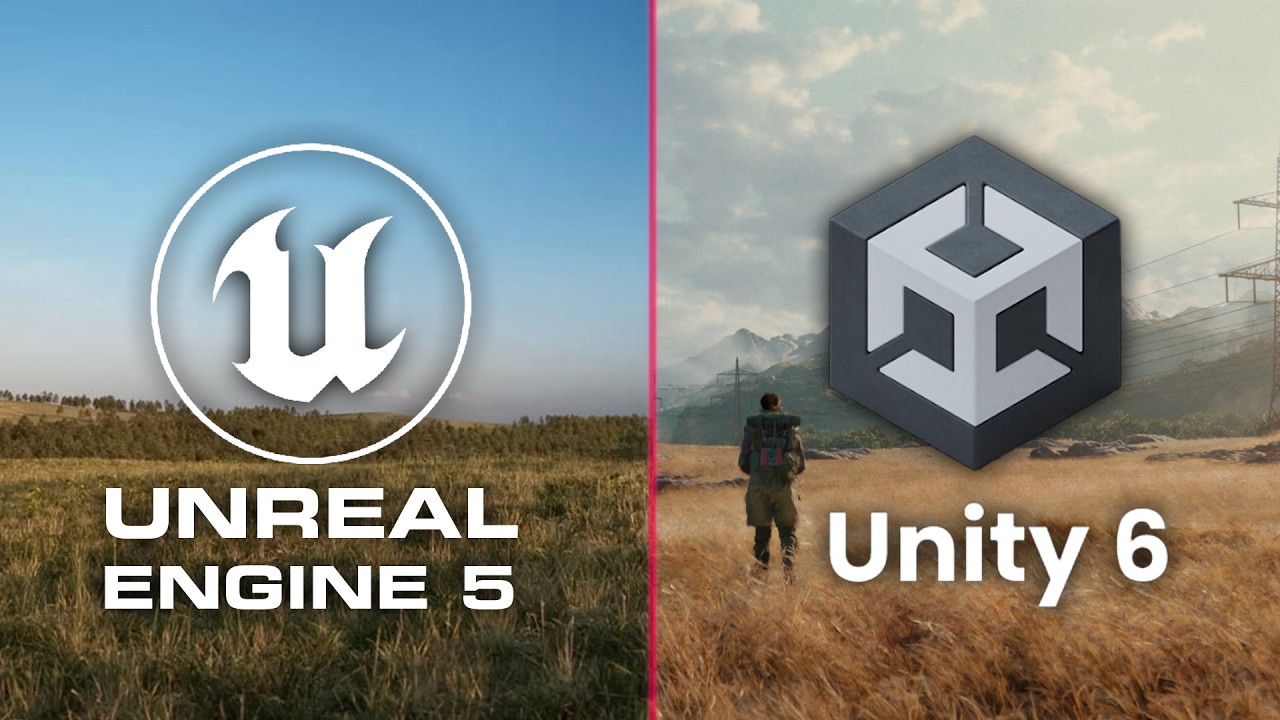
Unity Vs Unreal
Unity vs Unreal Engine: Which Game Engine Should You Choose?
Game development has become more accessible than ever thanks to powerful engines like Unity and Unreal Engine. Both engines are widely used in the gaming industry and support the creation of high-quality games for PC, mobile, consoles, and VR platforms. However, each engine has its own strengths and ideal use cases.
In this article, we compare Unity and Unreal Engine based on performance, graphics, ease of use, programming languages, and platform support.
1. Overview of Unity
Unity is one of the most popular game engines used by indie developers and mobile game studios. It is known for its ease of use, flexibility, and strong community support.
Unity uses C# as its primary programming language and offers a large asset store that helps developers speed up development. It is widely used for mobile games, AR/VR applications, and indie games.
Key advantages of Unity:
- Beginner-friendly interface
- Large asset store and community support
- Excellent for mobile game development
- Strong support for AR and VR development
Popular games built with Unity include:
- Pokémon Go
- Among Us
- Monument Valley
2. Overview of Unreal Engine
Unreal Engine is developed by Epic Games and is known for delivering stunning graphics and realistic environments. It is widely used for AAA games and high-end PC or console projects.
Unreal primarily uses C++ for programming but also offers a visual scripting system called Blueprints, allowing developers to build game logic without coding.
Key advantages of Unreal Engine:
- High-end graphics and realistic rendering
- Powerful built-in tools for large-scale games
- Blueprint visual scripting system
- Strong support for cinematic storytelling
Popular games built with Unreal Engine include:
- Fortnite
- PUBG
- Gears of War
3. Graphics Quality
When it comes to graphics, Unreal Engine generally has the advantage. It offers advanced rendering systems like real-time global illumination and high-end lighting tools.
Unity can also produce excellent visuals, but Unreal often requires less manual optimization to achieve realistic graphics.
Winner: Unreal Engine
4. Ease of Learning
Unity is generally easier for beginners because it uses C#, which is simpler compared to C++. The editor is also lightweight and easy to understand.
Unreal Engine has a steeper learning curve due to its complexity and heavier tools.
Winner: Unity
5. Performance
Both engines are highly optimized, but Unreal is often preferred for large-scale 3D games and high-performance PC/console titles.
Unity performs extremely well for mobile games and lightweight projects.
Winner: Depends on project type.
6. Platform Support
Both engines support multiple platforms including:
- Android
- iOS
- Windows
- Mac
- PlayStation
- Xbox
- VR devices
Unity is particularly strong in mobile and cross-platform development.
7. Asset Marketplace
Unity has one of the largest asset marketplaces where developers can purchase or download tools, scripts, and models.
Unreal also has the Epic Marketplace but Unity’s asset store is generally considered larger.
Winner: Unity
8. Royalty and Pricing
Unity offers different subscription plans depending on revenue.
Unreal Engine is free to use but requires a 5% royalty after the first $1 million in revenue per game.
Conclusion
Both Unity and Unreal Engine are powerful tools for game development. The best choice depends on your project requirements and experience level.
Choose Unity if:
- You are a beginner
- You are building mobile or indie games
- You want faster development with C#
Choose Unreal Engine if:
- You want AAA-quality graphics
- You are developing large-scale 3D games
- You prefer powerful rendering tools
Ultimately, both engines are capable of creating amazing games, and learning either one can open the door to a successful game development career.